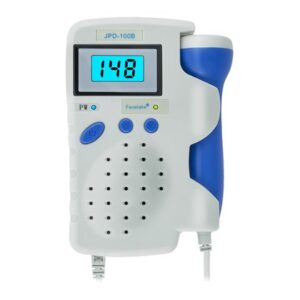
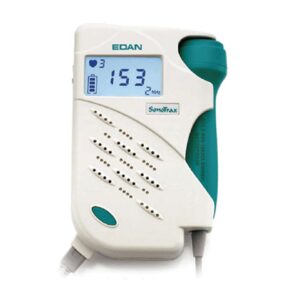
Doppler / Fetal Monitoring
Doppler / Fetal Monitoring refers to the use of Doppler ultrasound technology to assess fetal well-being by monitoring the fetal heart rate (FHR) and sometimes uterine contractions during pregnancy. Here’s a detailed overview of Doppler fetal monitoring:
Doppler Ultrasound Technology
- Principle: Doppler ultrasound uses high-frequency sound waves to detect movement and flow within the body. In fetal monitoring, it detects and amplifies the sound of the fetal heart, allowing healthcare providers to listen to and analyze the fetal heart rate.
- Handheld Doppler: A handheld Doppler device is commonly used for routine fetal heart rate monitoring. It consists of a probe or transducer that is placed on the pregnant woman’s abdomen. The probe emits ultrasound waves and receives the echoes bouncing off the fetal heart. These echoes are then processed to produce audible sounds of the fetal heartbeat.
- Continuous Wave Doppler: In some cases, especially during labor or in more complex situations, continuous wave Doppler ultrasound may be used. This provides continuous monitoring of the fetal heart rate and can also assess blood flow patterns in certain clinical scenarios.
Clinical Applications
- Fetal Heart Rate Monitoring: The primary purpose of Doppler fetal monitoring is to assess and monitor the fetal heart rate throughout pregnancy. Changes in the fetal heart rate can indicate fetal distress or other conditions that require medical attention.
- Assessment of Fetal Well-Being: Doppler monitoring helps healthcare providers assess the overall well-being of the fetus by evaluating the regularity and patterns of the fetal heart rate. This information is crucial for making decisions regarding obstetric management.
- Monitoring during Labor: Doppler ultrasound is often used during labor to continuously monitor the fetal heart rate and uterine contractions. This helps in identifying any signs of fetal distress or complications during the birthing process.
- High-Risk Pregnancies: In pregnancies considered high-risk due to conditions such as hypertension, diabetes, or intrauterine growth restriction (IUGR), Doppler ultrasound may be used to assess blood flow in the umbilical cord and fetal vessels, providing additional information about fetal well-being.
Safety and Considerations
- Safety: Doppler ultrasound is generally considered safe when used appropriately by trained healthcare professionals. It does not use ionizing radiation and is non-invasive. However, it should be used judiciously and in accordance with established guidelines to minimize unnecessary exposure.
- Interpretation: Interpretation of Doppler fetal monitoring requires expertise to distinguish normal variations from signs of fetal compromise. Healthcare providers assess factors such as baseline heart rate, variability, accelerations, and decelerations to make informed clinical decisions.
- Patient Comfort and Communication: During Doppler fetal monitoring, healthcare providers should ensure patient comfort and provide clear communication about the purpose of the procedure, findings, and any necessary interventions or follow-up.
In summary, Doppler fetal monitoring plays a vital role in obstetric care by providing valuable information about fetal heart rate and well-being throughout pregnancy and labor. It aids in early detection of fetal distress and supports timely intervention to optimize maternal and fetal outcomes.
Showing all 2 results