
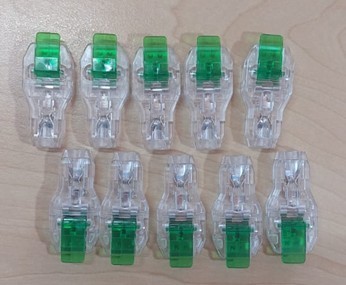
An ECG Multi-Clip Adaptor Kit typically refers to a medical device accessory used in electrocardiogram (ECG) testing. It allows for the connection of multiple ECG leads to a patient’s body via clips, enabling more comprehensive monitoring and accurate readings.
The ECG Multi Clip Adaptor Kit, 3 mm to 4 mm Banana, likely refers to a specific type of adapter used to connect ECG leads to various devices or electrodes with different connector sizes. In this case, the kit is designed to facilitate a connection between 3 mm and 4 mm banana plugs, which are common connectors used for various medical devices, including ECG equipment.
Key Components and Features:
- Banana Plugs: These are standardized connectors often used in medical and laboratory settings. A 3 mm and 4 mm banana plug refers to the diameter of the plug itself, which connects to the ECG machine or lead wire.
- Adaptor: The adaptor would enable the conversion from a 3 mm plug to a 4 mm plug or vice versa, making it easier to interface different equipment or electrodes. This is useful in settings where various ECG equipment or leads use different plug sizes.
- Multi-Clip Functionality: The term “multi-clip” suggests that the kit is designed for connecting multiple ECG lead wires or clips to a single machine, allowing for the measurement of multiple leads simultaneously (e.g., for limb leads or chest leads in a 12-lead ECG).
- Usage: It’s commonly used in medical facilities where ECG machines are being used for patient monitoring and the device connectors or electrodes vary in size. The kit ensures compatibility between different devices without needing to purchase specialized equipment for every size of plug.
In essence, this ECG Multi-Clip Adaptor Kit helps streamline the setup for ECG testing by ensuring compatibility between different connector sizes (3 mm and 4 mm) and allowing for multiple connections to be made at once, all while ensuring the accuracy and quality of the heart’s electrical data during diagnostic procedures.