
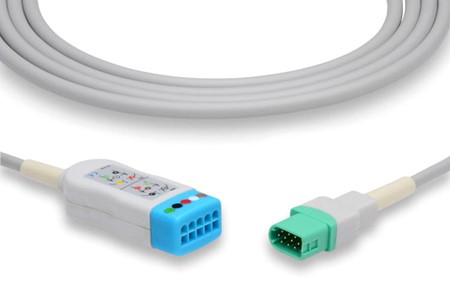
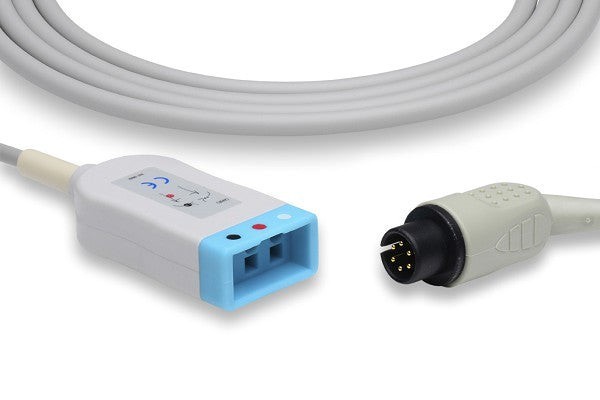
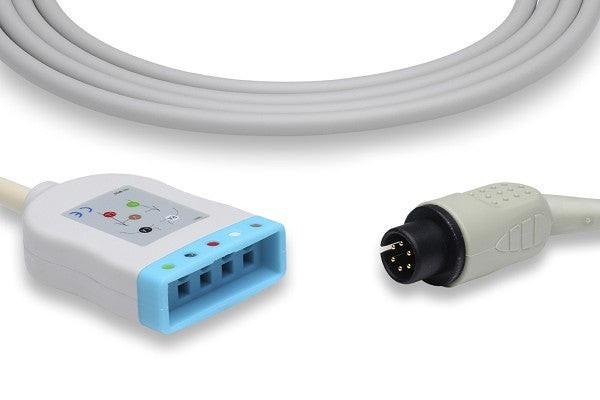
An ECG Truck Cables is an essential component in electrocardiography (ECG) machines, used to connect electrodes on the patient’s body to the ECG monitor or machine.
Here’s a detailed look at its features and functions:
Features and Components
- Cable Construction: ECG Truck Cables are typically made of flexible and durable materials, such as PVC or silicone, to withstand repeated use and movement without compromising signal integrity.
- Connectors: They feature multiple connectors on one end that attach to the ECG machine or monitor. These connectors are designed to ensure a secure and reliable connection, preventing signal loss during transmission.
- Electrode Connections: The other end of the trunk cable has connectors or snaps that attach to the ECG electrodes placed on the patient’s chest, limbs, or other specific locations as per the standard ECG lead placement.
- Compatibility: ECG trunk cables are designed to be compatible with various ECG machines from different manufacturers. Standardization ensures that healthcare facilities can use the cables interchangeably with different models of ECG equipment.
- Length and Configuration: Trunk cables come in different lengths to accommodate various patient sizes and positioning needs in clinical settings. They may vary in the number of leads they support (e.g., 3-lead, 5-lead, 12-lead configurations) depending on the type of ECG being performed.
- Signal Transmission: The primary function of an ECG trunk cable is to transmit electrical signals from the patient’s body, captured by the electrodes, to the ECG machine. These signals are then processed and displayed as graphical representations of the heart’s electrical activity (ECG tracings).
Importance in Clinical Use
ECG trunk cables are indispensable in healthcare settings for conducting routine ECG tests, diagnosing cardiac conditions, monitoring patients during procedures, and assessing cardiac function in emergency situations. Their reliable performance and compatibility with ECG machines contribute to accurate interpretation of ECG results and effective patient care.
ECG trunk cables are crucial components in electrocardiography, facilitating the transmission of electrical signals from patient electrodes to ECG machines for analysis and interpretation. Their design, durability, and compatibility ensure consistent and accurate ECG monitoring in clinical practice.