
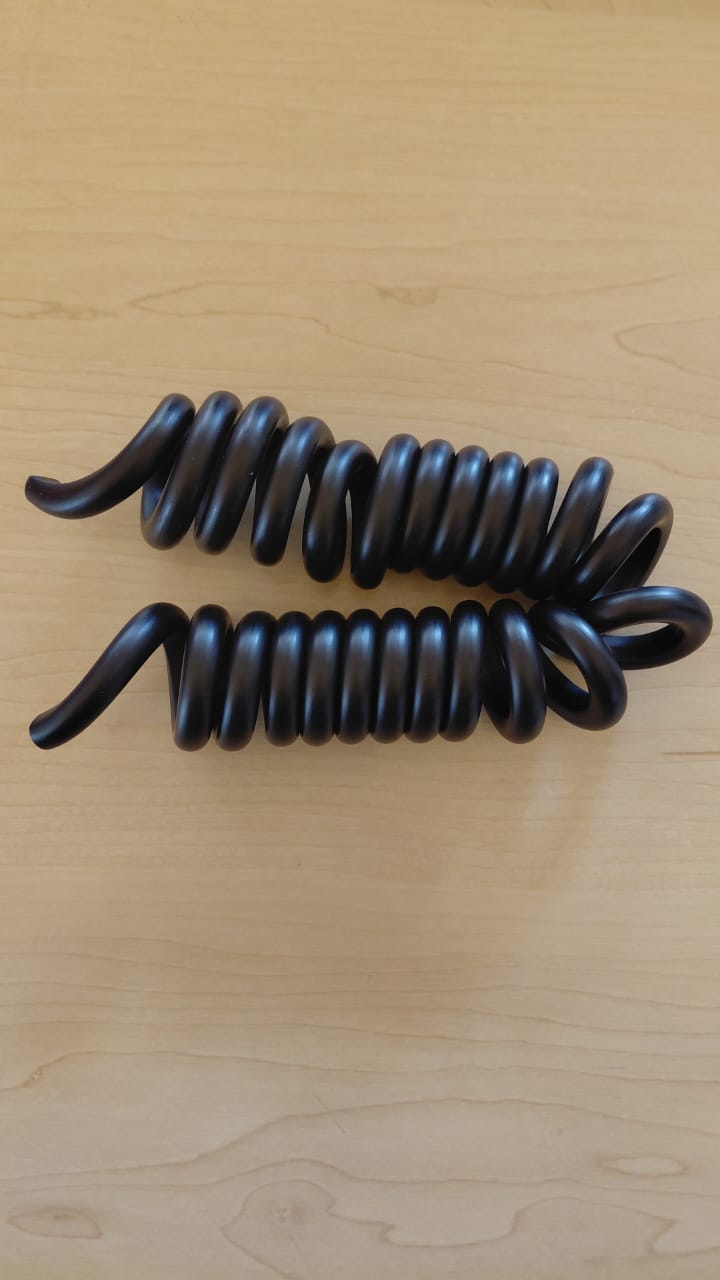
Blood pressure coiled tubing, also known as blood pressure cuff tubing or sphygmomanometer tubing, plays a crucial role in manual blood pressure measurement instruments.
Here’s a detailed look at its characteristics and functions:
- Material and Construction: Blood pressure coiled tubing is typically made from latex-free materials such as PVC or nylon. It is flexible and durable to withstand repeated use and handling in medical environments.
- Length and Design: The tubing is designed to connect the blood pressure cuff to the manometer (pressure gauge) and bulb (hand pump). It comes in various lengths to accommodate different patient sizes and procedural needs, typically ranging from around 20 inches to 40 inches (50 cm to 100 cm).
- Compatibility: It is standardized to ensure compatibility with different brands and models of blood pressure cuffs and monitors. The ends of the tubing are often equipped with connectors that securely attach to the cuff and the manometer/bulb, preventing air leakage during inflation and deflation.
- Functionality: The primary function of blood pressure tubing is to transmit air pressure between the cuff and the manometer/bulb. When the bulb is squeezed, it inflates the cuff through the tubing. Conversely, when the air control valve is released, air flows back through the tubing from the cuff to the bulb or manometer, allowing for controlled deflation.
- Maintenance: It’s essential to keep the tubing clean and free of debris to ensure accurate pressure transmission. Some tubing can be wiped clean with disinfectants or soapy water, while others may require more specialized cleaning procedures.
- Importance: Accurate blood pressure readings depend on the integrity and proper functioning of the tubing. Any damage or leakage can compromise measurement accuracy, leading to incorrect readings.
Blood pressure coiled tubing is a vital component of manual blood pressure measurement devices, facilitating the transmission of air pressure between the cuff and the manometer/bulb. Its flexibility, durability, and standardized design ensure reliable and accurate blood pressure readings in clinical settings.